
Do Programmers Need a Numpad? We Counted Every Digit in 1,350 Code Snippets


The short answer: for most programming, no. We counted every character in 1,350 code snippets across nine languages. Digits are just 1.96% of what you type, twelve times rarer than symbols, and even counting + - * / and the dot, a numpad could type only 4.8% of code. The keys that matter are on the number row, and 83% of number-row presses are symbols, not numbers. A tenkeyless keyboard loses you nothing you type in code.
Key Findings
- •
Digits are 1.96% of code characters, about one in every 51. Symbols are 23.9%, letters 74.1%.
- •
83% of number-row presses are not digits. The 9 key is pressed 62 times more for
(than for 9. - •
A numpad can type 4.8% of code, counting digits and
+ - * / ., all of which are also on the main keys. - •
Numbers in code are small. Half of all number literals are 0, 1 or 2, and 69% of digit runs are a single digit.
- •
HTML & CSS and Rust have the most digits (4.5% and 4.4%): CSS sizes and colours, and Rust's numeric types such as
i32.
Source: TurboType analysis of 1,350 code snippets in nine languages, 207,306 non-space characters, October 2026.
1. How Often Do Programmers Type Numbers?
Keyboard buyers ask whether programmers need a numpad. We answered it the direct way: we counted every non-space character in 1,350 code snippets from our practice library, 150 each in Python, JavaScript, TypeScript, Java, C, C++, PHP, Rust and HTML & CSS.
Digits are 1.96% of the characters, roughly one in 51. Letters are 74.1% and symbols 23.9%, so for every digit you type about twelve symbols. Here is how often each digit appears:
| Digit | 0 | 1 | 2 | 3 | 4 | 5 | 6 | 7 | 8 | 9 |
|---|---|---|---|---|---|---|---|---|---|---|
| Per 1,000 characters | 5.3 | 3.8 | 3.5 | 2.1 | 1.5 | 1.2 | 0.9 | 0.3 | 0.6 | 0.4 |
Zero is the most common digit, as you would expect from indexes, counters and default values, and the frequencies fall away fast after 2. Seven is the rarest digit of all.
2. The Number Row Is Really a Symbol Row
The number row carries 11.8% of everything typed in code. But look at what those presses are for:
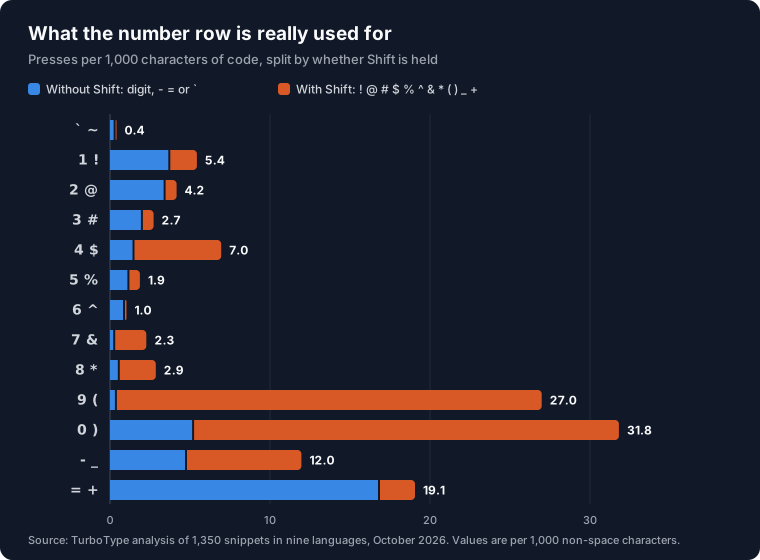
- = `), orange is the symbol above it.Only 16.7% of number-row presses are digits. 64.6% are shifted symbols and the remaining 18.8% are the unshifted -, = and backtick. The standouts:
- •
The 9 key is pressed 61 times more often for
(than for 9. - •
The 0 key is pressed 5 times more often for
)than for 0, and it is the busiest key on the row. - •
The 4 key is mostly
$(5.4 per 1,000 against 1.5 for the digit), thanks to PHP variables and template strings. - •
The equals key is the one exception: plain
=at 16.9 per 1,000 far outnumbers+.
| Key | Without Shift | With Shift | Shifted share |
|---|---|---|---|
` ~ | 0.3 | 0.1 | 14% |
1 ! | 3.8 | 1.7 | 31% |
2 @ | 3.5 | 0.7 | 16% |
3 # | 2.1 | 0.7 | 24% |
4 $ | 1.5 | 5.4 | 78% |
5 % | 1.2 | 0.7 | 35% |
6 ^ | 0.9 | 0.1 | 9% |
7 & | 0.3 | 1.9 | 86% |
8 * | 0.6 | 2.2 | 79% |
9 ( | 0.4 | 26.6 | 98% |
0 ) | 5.3 | 26.6 | 83% |
- _ | 4.8 | 7.1 | 60% |
= + | 16.9 | 2.2 | 11% |
3. What Numbers Appear in Code?
We also pulled out every number literal, 2,160 in all. The most common: 0 (447), 1 (374), 2 (237), 3 (152), 5 (95), 4 (72), 10 (65), 42 (57), 100 (42).
49% of them are 0, 1 or 2. Only 13.8% have three digits or more, and 68.5% of all runs of digits are a single digit. That matters for the numpad question, because a numpad earns its place on long numbers typed quickly, like prices, IDs and measurements. Code is mostly single digits scattered between symbols, where moving a hand to the numpad and back costs more than it saves.
The appearance of 42 in the top ten says something about our sample, too: it is the traditional placeholder number in example code. Full production codebases will have more configuration values, ports and constants than practice snippets do.
4. Which Languages Use the Most Digits?
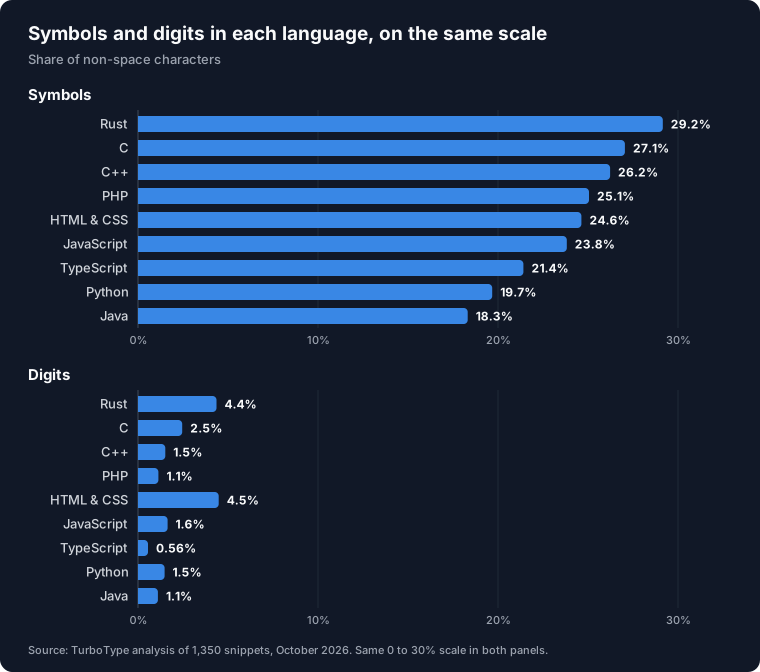
Every language is digit-light, but two stand out. HTML & CSS leads at 4.5%, from sizes like 16px, hex colours and tag names such as h1. Rust is close at 4.4%, and 38% of its digits are inside names rather than numbers: numeric types like i32 (used 86 times in our Rust snippets), f64 and u32.
TypeScript has the fewest digits, at 0.56%. Its snippets are mostly types, interfaces and function signatures, where numbers rarely appear.
5. Full-Size vs TKL vs 60% for Programming
Here is what each common keyboard size drops, and what our data says about the loss. Our data covers the characters you type, not navigation or shortcut keys, so where a size drops those we say so.
| Form factor | Roughly | What it drops | What our data says |
|---|---|---|---|
| Full-size | 104 keys | Nothing | The numpad can type 4.8% of code characters: digits plus + - * / . |
| Tenkeyless (TKL) | 87 keys | The numpad | Every character the numpad types is also on the main keys |
| 75% | 84 keys | Squeezes the navigation keys together | Same characters as TKL |
| 65% | 68 keys | The function row | F-keys are not in our data; debugger and IDE shortcuts often use them |
| 60% | 61 keys | Function row, arrows, navigation keys; backtick often shares Esc | Backtick is rare (0.4 per 1,000) but arrows and navigation are not in our data |
Tenkeyless is the safe choice for most programmers. It drops only keys that duplicate the main keyboard, and the narrower board lets your mouse sit closer to your typing position.
Keep a numpad if you also do a lot of number entry: spreadsheets, finance, data work. Some 3D tools, such as Blender, also use the numpad for viewport shortcuts by default.
Go 60% only if you like layers. The characters are all there, but arrows, Home, End and the function keys move behind a modifier, and those are keys programmers use constantly for editing and debugging.
6. What This Means for How You Type
The real lesson is not about the numpad; it is about the number row. Most of its presses are shifted symbols, which means a long reach plus a Shift for some of the most common characters in code. Our analysis of programming symbols found parentheses alone are 53 of every 1,000 characters.
Those reaches are where programmers who type prose quickly lose speed on code. Hold Shift with the opposite hand, and drill the row until ( ) $ _ + are automatic. Our symbols track is built for exactly that, and our keyboard layout comparison shows the number-row symbols stay put on almost every layout.
7. Method and Limits
We counted the 207,306 non-space characters in 1,350 snippets from TurboType's nine language tracks, leaving out the symbol-drill track. Number-row figures assume a US layout, where the shifted number keys give ! @ # $ % ^ & * ( ). Number literals are runs of digits not attached to a name, with an optional decimal part.
Limits. This measures characters, not the arrows, function keys and shortcuts you press while editing. Practice snippets also contain fewer configuration numbers, ports and constants than full projects, so real codebases may have a little more digit typing than this.
8. Frequently Asked Questions
Do programmers need a numpad?
For most coding, no. Digits are 1.96% of the characters in code, about one in 51, and a numpad can type only 4.8% of code characters even counting + - * / and the dot. The number row and the symbols on it matter far more. A numpad helps if you also enter lots of numbers, for example in spreadsheets or data work.
Is a tenkeyless keyboard good for programming?
Yes, for most programmers. A tenkeyless keyboard drops only the numpad, and every character the numpad types is also on the main keys. It also brings your mouse closer to your typing position.
Is a 60% keyboard good for programming?
It can be, if you are comfortable with layers. A 60% board drops the function row, arrow keys and navigation keys, and often puts the backtick on the same key as Esc. The backtick is rare in code overall, but arrows and function keys are used constantly for editing and debugging and need a layer.
How often do programmers type numbers?
Rarely. In 1,350 code snippets, digits were 1.96% of non-space characters, against 23.9% for symbols. Half of all number literals were 0, 1 or 2, and 69% of runs of digits were a single digit.
Why is the number row important for programmers?
Because of the symbols, not the numbers. 83% of number-row presses in code are symbols. The 9 key is pressed 62 times more often for ( than for 9, and the 0 key five times more often for ) than for 0.
Next Steps:
- If you are choosing a keyboard for coding, start with tenkeyless and add a separate numpad later only if you miss one.
- Take the 60-second coding typing test and notice how many of your errors are on the number row.
- Spend ten minutes on the symbols track practising the shifted number-row symbols.